Pages

6.11.2010

Secretary of State Clinton in Barbados

The U.S Secretary of State Hillary Clinton was in town (Bridgetown) for a brief visit. Let me say first off, I did not meet her or go to her press conference, much as I would have liked to. I am a huge fan of the Madam Secretary.

Continuing with the Obama Administration's interest in renewing attention and positive relations in the backyard of the U.S. with evidence from his trip to Trinidad and Tobago for the 2009 Summit of the Americas meeting, Secretary Clinton made a trip to the Caribbean and Latin America over 6 to 10 June. I am thrilled she stopped in Barbados.

I see her visit to the area as extremely positive for the region. She announced commitments from the U.S. for support of such areas as: More assistance to Haiti, energy security and climate change cooperation, health cooperation concerning HIV and AIDS, trade relations, and continued and on-going dialogue among other concerns. There was a commitment to $300 million in U.S. (Barbados dollars are 2 to 1 with U.S. dollars) aid to the Caribbean with about $8 million going towards climate change and energy projects.

And showing off her humorous side, Secretary Clinton has this to say to assembled U.S. Embassy staff and their family members in Bridgetown:
I hope that you all know how much President Obama and I appreciate your long hours, your commitment. Although frankly, serving in Barbados, I mean – (laughter) – I don’t know. I’m not going to hear too many complaints from anybody here. But I do think that it’s important to underscore how everything we’re trying to do to reengage with and deepen and broaden our relationships with our friends in the Caribbean depends on you.

I hear you, Ms. Clinton, it's tough "serving" here in paradise, but Barbados, with its strong infrastructure, solid government, and hard-working, committed people is the perfect place to model success for the rest of the world and, in particular, the Caribbean. U.S. support and attention is a positive thing in a region that has been overlooked for too long. As she stated at the press conference, "We have had a long relationship between the United States and the Caribbean, but there was a sense that the United States was absent from the region. So we are back. We are back 100 per cent. We are back and committed."

The photo of above of Secretary Clinton is from the Barbados NationNews on-line version of the newspaper.

5.30.2010

We Did Not Miss Mango Season


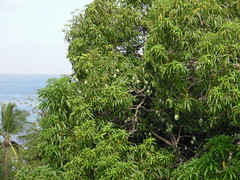
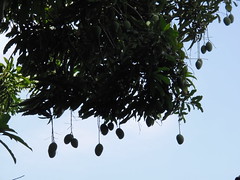
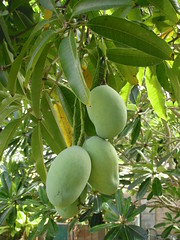
Our view from our balcony looks towards the sea...and a huge mango tree. For months it has done nothing but been beautiful to look at. Now it is covered with mangoes. And I am feeling pretty lucky.


Photos from my Flickr photostream.

5.29.2010

Applying for a U.S. Fulbright Scholar Grant


I am in Barbados on a Fulbright Scholarship. Originally it was a nine month appointment and it was recently extended to 11 months, I am happy to say. I’ll be here until mid-August. This post is to suggest some tips that worked for me in applying for the Fulbright. The announcement from the CIES comes out in April for the next academic year for the U.S. Scholars Core Fulbright Scholar Program. Here is this year’s listing for academic year 2011-2012. The online version is a great improvement over the paperback book. Though it’s fun to rifle through the book, it is easy to sort to what you’re interested in with the web version. This may save on paper, too. The deadline to apply is August 2, 2010, so these tips should help get you on your way for your application.

Comb the Fulbright web page to get a feel for the program. Take a look at the Who’s Eligible page. Make sure you can apply for the Fulbright. You must be a U.S citizen, not a permanent resident.

Go through this list in great detail. It is a huge list so sort to what your interests are. Set the search parameters in Search for Awards area. You can put in your discipline, whether you are looking for teaching and/or research (under Activity), country. As I have said, you do not need a Ph.D. for many of the Fulbright grants so you can sort by No Ph. D. Required. For instance, I just searched on Teaching and Research, No Ph. D. required, Information Science, any geographic location and got 41 countries looking for me! See, that is what I did (with the paperback book) in April 2008 when I was looking for the placement I have now. I was overwhelmed by the places looking for some with technological skills and not requiring the Ph. D. Try it. Another example: Geology, requiring a Ph. D., all locations….there are too many to count.

Next weed out where you do not want to go. If you don’t feel like going to Ireland or the Maldives (picked at random, by the way), why waste your time looking at those countries?

When you have narrowed down your search to your discipline and the country, print out the page of information for each country. Yes, it’s a waste of paper, but jotting notes down on these sheets will help you sort out who you contacted, what department they’re in, dates and other useful information.

Now you need to make some contacts. Look at the university looking for a Fulbrighter. Look at the Grant Activities section. For example for Trinidad and Tobago at the Univ of the West Indies, St. Augustine campus, you will find this information on the Grant Activities: Teach and conduct research in a wide range of disciplines including humanities, business administration, social sciences, or natural and applied sciences. Ratio of teaching to research is roughly 50/50. Do some research. Search the university’s web page thoroughly for your department or area of expertise. Contact the department chair. Contact a faculty member who shares your unique area of scholarship. Reach out by email. Make phone calls. Some areas in the world, especially the developing world, have limited and intermittent internet access so be persistent in your search to make contact. You will NEED a contact for your application, by the way, so be respectful and pleasant in all forms of communication. When I found a name and contact that looked promising, I wrote a fairly lengthy email and attached my CV. I wrote what my background was, what I could teach (“I see you teach Geographic Information System ENV707. I would love the opportunity to teach that course because I have taught GIS at XYZ College and I am…” Write about how your areas of scholarship and research might overlap with theirs. Be friendly and engaging. Remember that they do not need to pay you (though don’t write that in your email). You are a freeby to them. Your application will be stronger if you have a letter from someone in country. In fact, some countries require a letter of invitation. Mine did not.

Next, contact the Regional Program Officer (listed at the top of the Country Overview - Award page) to let them know you are interested in a particular country within their purview, an email or a phone call to let them know you exist. If you end up applying to the country that they oversee in the Fulbright program, the first time they hear of you should NOT be when your application rolls across their desk.

Take a look at the past grant recipients list. Contact some of the Fulbrighters that had awards within the past three to five years to the country you wish to apply to. Ask all those questions you want to know about: Did you feel supported by the department you were with? I want to take my children, how will that be for me? Was it safe there? What’s Malta like? How are the resources on campus? What’s the Library like? This was very helpful to me. Past Fulbrighters want to share their experiences (this blog is proof of that!) and some were quite honest with me. If you do win an award, the contact that you made will be someone to get back in touch with for those where should I live questions.

Your letters of recommendation should be from people who know you well, who will say good (but true) things about you, and can cover all the areas you want to highlight about yourself. If you are doing a teaching and research proposal, make sure one of your recommenders covers one aspect of those areas. I think it’s important to NOT have all your references come from the same institution, shows you get out and about.

I should probably have some words of advice about your five page proposal. Write it well. Be succinct. Once you’ve made an in-country contact, you will have a better idea of what 1) will be your research agenda, and 2) what you will teach. Talk about your research in a way that shows you have done this before and will be great at it. Talk about your teaching as though you know exactly what you are doing. Be positive. Use the active voice. Have people read it to see what they think. Intelligent non-specialists will be reading your application, so make it as clear as possible and totally free of disciplinary jargon. Have your in-country contact read it to see if it makes sense. It’s only five pages. Make them count.

That is what I have for today. These are things that you must be doing now if you want to be a Fulbright Scholar in 2011-2012. After your application is submitted (August 2, 2010 deadline!), you will wait and wait to hear anything. You may want to contact the Regional Program Officer to see how things are going. Your application will go through a U.S review first. If you make it through that, then your application goes (along with all the others that made it through the U.S. review) to the host country. If there are only two Fulbright Scholarship appointments for a country and there are ten qualifying applicants, well, you get the picture.

The Fulbright experience is an amazing opportunity. It is worth trying for. Good luck!

5.12.2010

Cricket in the West Indies

Before I even moved to Barbados I heard that the ICC World Twenty20 Cricket matches would be held here and in other parts of the West Indies. I was excited because I have wanted to know more about cricket. I tried to learn about it when I was Trinidad, but never really got the hang of it. I'm starting to get it.

We went to two matches on separate days at the Kensington Oval in Bridgetown. The video below shows bits and pieces of the matches. What I found out is that Twenty20 cricket is a much shorter, faster-paced sport than all-day cricket or Test cricket (five days, e-gads!). The game is over in about three hours. Each team gets a turn at batting; they are "up" for 20 overs, then the other team has their "ups." The ball, when hit by the batsman, can go anywhere on the oval-shaped field. If the ball reaches the boundary that marks the outer perimeter of the playing field, the batter gets 4 points. That's also called a "boundary." If he (or she) hits it over the boundary, like a "home run," that counts for 6 points. You can get ones and twos for little dribbles and drabbles hit. There are two guys with bats on the cricket pitch. They take turns batting, plus they are both running back and forth between the wickets, sort of like two "home bases."

The "pitchers" are called bowlers. There are two bowlers out there, also taking turns at the batsmen. There's fast bowlers and slow bowlers and spinners. I think that the bowlers are trying to knock the wickets over (they are wooden stumps), so the batsmen are trying to defend the wicket yet still try to hit the ball for some runs. If there is a hit, the ball can be caught in the air for an out, or the ball can be thrown at the wicket, so the fielding player tries to get it there and hit it before the runner gets there.

The stands in the Oval were another thing altogether. There's a lot of noise, a lot of good natured-cheering, there's not a lot of cursing and yelling at "bad calls," and there's lots of loud music and dancing girls and boys. Check out the video for a view into the cricket fan culture.


There, that's an American's view of the game but using some baseball terminology. I loved it. It was great fun. Do I think cricket will catch on in the US? No. They may have abbreviated the game to get more young people (and Americans) into cricket, but the US is pretty saturated with its sports. Cricket is, of course, played in America, but it's played like beach cricket is played here in Barbados, usually pick up games in parks. In Poughkeepsie (where I usually live) there's a significant Jamaican population and there is a pitch on the outskirts of town where I see folks gather on Sundays to play. They dress in cricket whites. I'm sure one can see rousing cricket matches down in Brooklyn and elsewhere. I would love to see cricket in the US. It's a civilized sport.

5.07.2010

Fireball International 2010 - Regatta in Barbados


We got to watch from a distance the Fireball International regatta at Carlisle Bay. Here's another Fireball World link. These sail boats are small and slick and super fast. They are raced by two people, one "crew" who is really just a counterweight hanging by a tether and harness over the edge of the boat and the other is the skipper. I made of video of what the regatta looked like from the event site, the Barbados Yacht Club in Bridgetown. I hope you can tell from the video that there were about 12 to 15 countries represented which you can tell from the IDs on the sails and flags a-flying.

Two international competitions have converged on Barbados at once: the Fireball International races and the World Twenty-20 Cricket matches. More on cricket in a future post.

My kids take sailing lessons at the Sailing Association next to the Yacht Club. That's how I heard about the Fireballs. But I also read about the Fireballs from my favorite local blogger, Planet Barbados' Janet Shattuck Hoyos, who adores Carlisle Bay about as much as I do, I think. She had this video linked from her blog. Check out the speed these boats are flying.


Next year Fireball International 2011 is in Ireland. I think they really might need those wet suits the racers were sporting in sunny Barbados this year.

4.20.2010

March and April are Kiting Flying Months

In Barbados there is a daily gently breeze. The wind is perfect for kite flying (and sailing, and wind surfing, and trips on catamarans...). All during March and now into April, I hear the sound of kites zipping through the air in my neighborhood and I look up and see one lone kite. Or off in the distance, from a hill top, I can see several kites being flown in an open field. Kites stands sprang up in March. Of course, kite flying is an evening or weekend activity.

I asked someone about the kite flying going on now. She said she wasn' t really sure but if one was to fly a kite at any other time of the year, one would look silly. Strange, I thought, with all this wind. Then another person said the reason for the kite flying at this time of year is related to Easter and the resurrection of Christ. The kites symbolize Jesus' rising. Aha!

Creative Commons photo is from orphanjones photostream.

4.09.2010

Talk at CERMES on Tablet PCs in Higher Ed

I was invited to give a talk at the monthly lunch-time brown bag series at CERMES. It was nice to go on about using tablet PCs in teaching, especially in the field. These are my slides with links out to the videos I showed.