Pages

Showing posts with label archaeology. Show all posts

8.11.2013

The Dead Sea, Qumran and the Essenes and the Heat

We woke up early and headed in the direction of the Dead Sea. We traveled through the territories. Nothing major to report here. As we drove we saw sea level signs as we descended into the Dead Sea valley.

First stop on our way - Qumran National Park - which ties in nicely with seeing the Dead Sea scrolls exhibit at the Israel Museum. As many of the park her have, there was an interesting video on the people who lived here and wrote and hid the scrolls. They were Essenes, ascetics who were like Jewish monks. They were men (only) who studied, worked communally, took many ritual baths (of course, because it is crazy hot!), and wrote prolifically. We were roasting hot and I cannot see living there let alone thinking much about anything other than being hot. By the way, this National Park has a huge dining hall and is a popular spot on the tour bus circuit.

We then drove past our housing accommodations (the Youth Hostel) to get to a place listed in the Lonely Planet guide book as a the easiest and cleanest place to get into the Dead Sea. It was not a highlight of the trip. The water was as hot as the air (~ 40 degrees C), it stung our skin, it smelled of sulfur, and there was no easy place to spray off. Yes, we were buoyant. But we could have skipped this and been fine. See how happy we look?!

That evening we stayed at the Ein Gedi Youth Hostel. It had a great view of the eerily quiet Dead Sea. Most lakes of this size that I've ever witnessed had at least some boat activity. Not the Dead Sea. It's aptly named.

Dinner was pretty good. Yes, there were loads of young people on Birthright trips but some people our age were staying so don't stress about being a non-youth in a youth hostel. The princes of anything else are out-of-sight. For instance, a night here at the hostel cost ~ $150 USD. Oh and again, the same single bed, bunk bed sleeping arrangements as in the Field School housing.


8.06.2013

Archaeology, Take 2

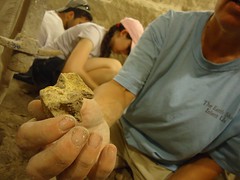
We visited a real archaeological excavation. Thanks to our friends, Rich and Lisa, who told us about the National Park Beit Guvrin, we went to an ongoing, archaeological dig and found real things!

All around Israel, archaeological findings are everywhere and those locations are called 'tels,' like what we saw in Tzippori. But here at Beit Guvrin the materials from the civilization being excavated were 2,000 years old, during the time of the Maccabees.

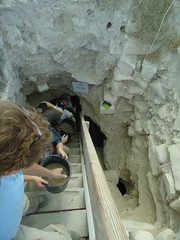
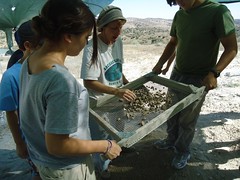
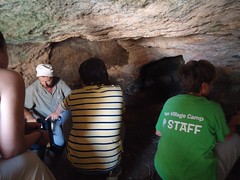
Run be We Dig Israel, you get into the park and you pay extra to do the dig but, let me tell you, it is so worth it! There is a guide who gives you a thorough over view of what you are going to do, why you are doing it, what's been done before, what your 'work' will go towards, what the background is for this area. We went into a lighted cave. There are, apparently, 5,000 other underground excavation sites just like the one we went into but on this some hill in this park. They gave us all the tools we needed (bucket and shovel and our hands). Then we were told to go to work! We found pottery, bones, shells and charcoal. We believe that we were digging into a former kitchen. There were buckets for 'finds' and buckets for dirt. Then once are digging time was up, we had a bucket brigade to take all the dirt and finds up to outdoors. From the outside, we then sifted all the buckets of dirt and found even more stuff that got added to the investigation. This was not a free-ride tour; you really had to work!

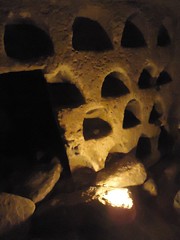
As an added bonus we were shown another cave, one yet to be excavated. It was lighted by candles and there were pigeon holes, small cuts into the walls of the cave where birds were kept.

8.04.2013

Israel is for Archaeology

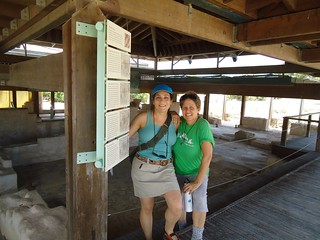
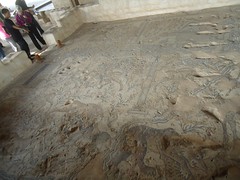
With the Bar Mitzvah celebration over, we packed up, left the nice cottage and went to the nearby Tzippori Nation Park. Our friend, Rachel, during graduate school, helped to excavate the "Mona Lisa of the Galilee," the floor mosaic that is part of the park and we got a bit of a personal tour from her. At the park, there are two episodes of civilizations and excavations: the Romans and Greeks. It is a fascinating, on-going and unfolding story. Not a Roman outpost, like Hadrian's Wall, but perhaps a rich person's or dignitary's home with elaborate mosaics revealing the significance of the Nile, the importance of water, larger beasts attacking smaller beasts, and Amazons. Really,...Amazons!?!

The grounds here at the National Park offer many interesting places to poke around, including a covered excavation site, a building housing an excavated home, a large outdoor theatre, and a water/irrigation system.

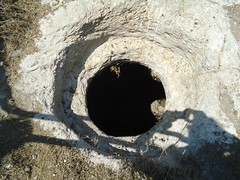
We then went caving with a tour guide in Rhuma (which could mean Roma but the guide, Michael, was only hypothesizing about that) where human-made caves were discovered.  It is thought that these caves were built so that the Caesar could meet and talk with the Rabbi of Tzippori (the one who was redacting and re-creating Judaism for modern times). But no one wanted the other's people to see these meetings so they met in secret, in the caves. Then, we were told, the caves were connected cisterns and filled in with tunnelled-out material. These caves were used as hiding places for Jews when the Romans came by during the Bar Kochba revolt (132-136 CE).  Roman soldiers used to wear spiked shoes (ouch!) and you could hear them coming as they clomped along the limestone.

Came back home tonight, back to Moshav Aviezer.