Pages

8.08.2013

More Cave Time in Mey Kedem and Acco

We got up early and drove from Binyamina to Mey Kedem for a guided walk in a cave with water flowing in it. I didn't take pictures in the cave. This cave was part of the water system put in place by the Romans and King Herod to supply water to Caesarea. We saw the aqueduct yesterday and today the tunnel. Great to have that continuity and I did not realize that this was part of the same water system built so long ago but, of course, it makes sense. The kids loved it. We needed flashlights!

Then we drove north to Acco (also Acre) to see this walled city on the Mediterranean with a mix of Arabs and Jews. When we got there and parked, we noticed there was a lot of festivities going on, especially prominent: very fast, horse-drawn carriages zooming about the narrow streets. Not really sure what it was all about and I don't think it was a holiday.

First, we hopped on a boat that took us around the Acco harbor. You get a nice view of the walled city from the outside, some kids were jumping off the wall in the sea. It takes about a 1/2 hour and was worth it. Walled cities are good (like Old San Juan, Puerto Rico) and still have an appeal in the days of sea level rise.

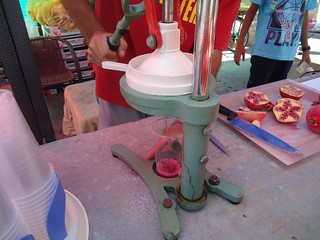
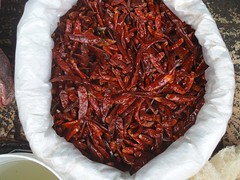
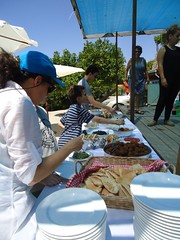
Then we got off and had a fresh-squeezed pomegranate juice, tart but terrific, ate hummus, tabuli, mushroom salad and Greek salad at restaurant right on the water. Delicious food, I should have gotten the name. We then strolled our way back to the car and shopped along the way. We found, what our daughter calls "Hebrew pants," pants she has been looking for for several years and hasn't found them in the States. I call them MC Hammer pants, others have called them Genie pants. I loved the shopping in the old city, so many beautiful dried goods for sale. My daughter also discovered a new favorite...a Nutella quesadilla.


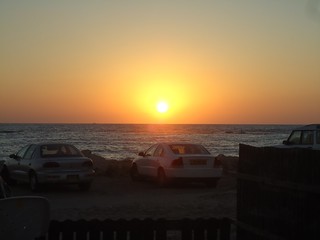
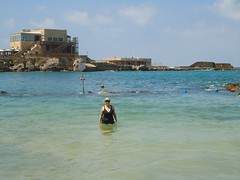
Then we cruised down the coast road in search of wind surfing. There is a place just south of Caesarea where you can not only wind surf, there's sea kayaks, kite boarding, SUP and surfing. Who knew!?! And it's not all gross and over-run with tourists. As a matter of fact, it has a locals-only kind of vibe. The sand was fantastic. 20 scheckles to park. Food for sale. Very casual. Now THIS was like places in Barbados. Only thing missing were the Jet Ski guys. If I can find it on the map, I'll load it up here, but right now, I can't find it in the Google. Here's a picture instead.

8.07.2013

Caesarea, the Mediterranean Sea and Zircon Ya'akov

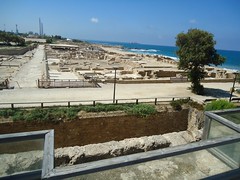
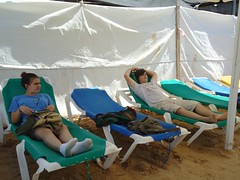
We drove to the Mediterranean today. It's my first time seeing it and I was a little excited. We accessed the Sea via a National Park - Caesarea. Caesarea was built by King Herod in about 25 to 13 BCE. Like so much of Israel, there's a long history here. This park was set up a little more like Disneyland than the other parks we've been to. There was an overly dramatized movie to watch, that showed the long history of Caesarea. There were shops. There was the beach, which was basically gross, but we could get a beer and hummus plate delivered to our umbrella (all overpriced, mind you). It weren't no Barbados.


One cool thing about Caesarea was the aqueduct. Herod built an elaborate and quite long aqueduct to bring fresh water to Caesarea and the above-ground portion is still visible here.

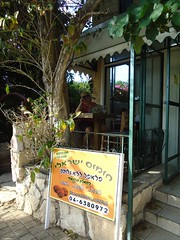
That evening we stayed in nearby Binyamina at a terrific bed and breakfast or tzimmer called Grushka B & B. Like most of our trip thus far, we found this sweet and clean place in the Lonely Planet guide. The AC worked great and we walked to our best falafel yet, though I could not tell you the name (see the photo).

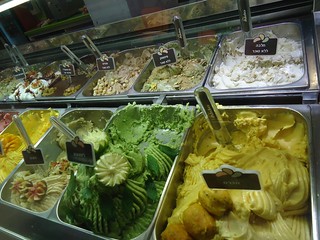
Then in the early evening we went to Zircon Ya'akov to walk down the promenade. There were a lot of cute shops. There was a great paper artist there. Street musicians. And the best ice cream shop I've ever tasted...Aldo's Ice Cream. Though we heard that this was the place of early Zionists, we didn't get that feeling, probably because we weren't there long enough.

8.06.2013

Archaeology, Take 2

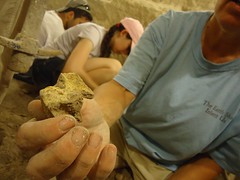
We visited a real archaeological excavation. Thanks to our friends, Rich and Lisa, who told us about the National Park Beit Guvrin, we went to an ongoing, archaeological dig and found real things!

All around Israel, archaeological findings are everywhere and those locations are called 'tels,' like what we saw in Tzippori. But here at Beit Guvrin the materials from the civilization being excavated were 2,000 years old, during the time of the Maccabees.

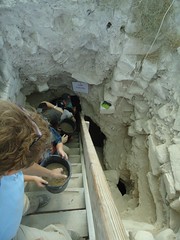
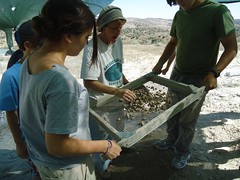
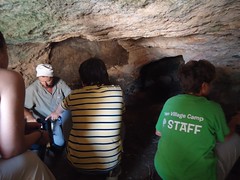
Run be We Dig Israel, you get into the park and you pay extra to do the dig but, let me tell you, it is so worth it! There is a guide who gives you a thorough over view of what you are going to do, why you are doing it, what's been done before, what your 'work' will go towards, what the background is for this area. We went into a lighted cave. There are, apparently, 5,000 other underground excavation sites just like the one we went into but on this some hill in this park. They gave us all the tools we needed (bucket and shovel and our hands). Then we were told to go to work! We found pottery, bones, shells and charcoal. We believe that we were digging into a former kitchen. There were buckets for 'finds' and buckets for dirt. Then once are digging time was up, we had a bucket brigade to take all the dirt and finds up to outdoors. From the outside, we then sifted all the buckets of dirt and found even more stuff that got added to the investigation. This was not a free-ride tour; you really had to work!

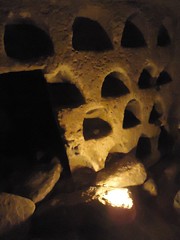
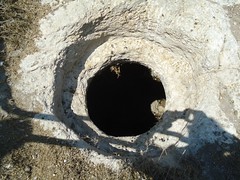
As an added bonus we were shown another cave, one yet to be excavated. It was lighted by candles and there were pigeon holes, small cuts into the walls of the cave where birds were kept.

8.05.2013

Resting

Today was a sleep-in day. But it's been so hot, it was really difficult to get comfortable sleeping, plus the bed is super hard. We also did some laundry.

This is our place in Moshav Aviezer.

8.04.2013

Israel is for Archaeology

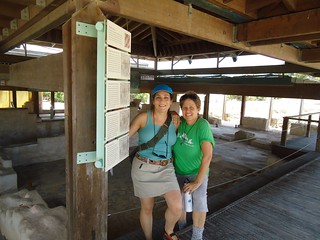
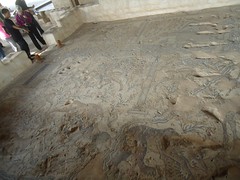
With the Bar Mitzvah celebration over, we packed up, left the nice cottage and went to the nearby Tzippori Nation Park. Our friend, Rachel, during graduate school, helped to excavate the "Mona Lisa of the Galilee," the floor mosaic that is part of the park and we got a bit of a personal tour from her. At the park, there are two episodes of civilizations and excavations: the Romans and Greeks. It is a fascinating, on-going and unfolding story. Not a Roman outpost, like Hadrian's Wall, but perhaps a rich person's or dignitary's home with elaborate mosaics revealing the significance of the Nile, the importance of water, larger beasts attacking smaller beasts, and Amazons. Really,...Amazons!?!

The grounds here at the National Park offer many interesting places to poke around, including a covered excavation site, a building housing an excavated home, a large outdoor theatre, and a water/irrigation system.

We then went caving with a tour guide in Rhuma (which could mean Roma but the guide, Michael, was only hypothesizing about that) where human-made caves were discovered.  It is thought that these caves were built so that the Caesar could meet and talk with the Rabbi of Tzippori (the one who was redacting and re-creating Judaism for modern times). But no one wanted the other's people to see these meetings so they met in secret, in the caves. Then, we were told, the caves were connected cisterns and filled in with tunnelled-out material. These caves were used as hiding places for Jews when the Romans came by during the Bar Kochba revolt (132-136 CE).  Roman soldiers used to wear spiked shoes (ouch!) and you could hear them coming as they clomped along the limestone.

Came back home tonight, back to Moshav Aviezer.


8.03.2013

Siman Tov and Mazal Tov!

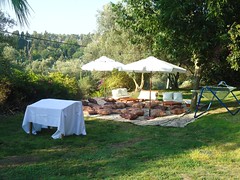
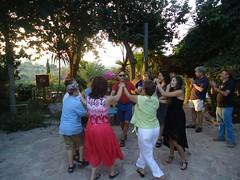
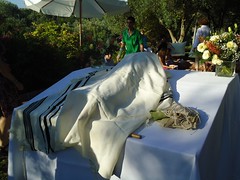
What a beautiful place to celebrate a simcha. Again, this is Tzippori Guest House. It was a wonderful day with fantastic food and a sweet setting.


8.02.2013

In Tzippori for a Bar Mitzvah

We drove to Tzippori for our friend's son Bar Mitzvah. Where we stayed (and where tomorrow's ceremony will be held) was the Tzippori Guest House. It was a great location, with very clean rooms and a pool!

Tzippori, by the way, was the site of the creation of Judaism as we know it today. As I was told, the second temple was destroyed and Jews regrouped in Tzippori.

Tzippori, Zippori, Tsipori, I don't know how to spell it but all of these come up in all of my navigational devices.

View Larger Map